How to get honest feedback on a startup idea
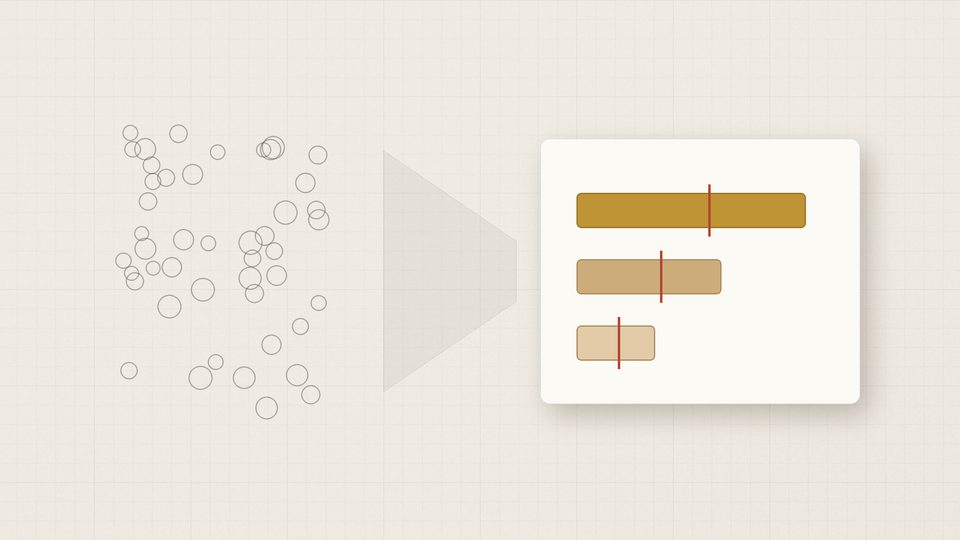
Friends say they love it; strangers say they would use it. Why kind answers carry little information, and how tests designed to break the idea tell you more.
Everyone liked it
Picture a founder with an idea for a booking tool for small physiotherapy clinics. This is a made-up example. Over a month they describe it to everyone they can: friends, former colleagues, two clinic owners they know, people at a meetup. The response is warm. Most people say it is a great idea. Several say they would definitely use it.
Three months after launch, almost none of them have signed up. Nobody lied. Each answer was sincere at the moment it was given. But the founder had collected a great deal of encouragement and almost no evidence.
Why kind answers tell you so little
There are a few reasons, and none of them is about people being dishonest.
- Saying yes is free. Telling a friend their idea sounds good costs nothing and keeps the conversation pleasant.
- Hypothetical questions get hypothetical answers. "Would you use this?" asks people to predict their own future behaviour, which is hard to do accurately.
- You are asking about your solution, not their problem. Once they have heard your pitch, people react to it rather than telling you how they deal with the problem today.
Opinions still have a use: they reveal gaps in the plan and words people use for the problem. They are weak evidence that anyone will change what they do or pay you.
Try to break the idea, not to confirm it
The more useful stance is to stop collecting reasons the idea might work and start looking for the result that would show it does not. Confirmation never ends: there is always one more person who might say yes. A test aimed at breaking an assumption can end, because you decide in advance what failure looks like.
That decision is the whole discipline. Before you run anything, write down the result that would end the idea, and put a number in it. "Fewer than 5 of 50 clinic owners we approach agree to a paid pilot" is a commitment you can be held to. "Clinic owners are not interested" is not, because once the data arrives you can always argue about what "interested" meant. The numbers here are made up; what matters is the form.
Questions that produce honest answers
When you do talk to people, a few habits help.
- Ask about the last time. "When did this last happen? What did you do? What did it cost you?" Past behaviour is far more reliable than predictions.
- Ask what they use today, including the unglamorous answers: a notebook, a spreadsheet, a receptionist's memory.
- Ask for something small that costs them. Time for a pilot, a deposit, a signed letter of intent, an introduction to the person who signs the cheques. A polite yes that turns into a no at this point is the most useful answer you will get.
- Talk less than they do. Describe the problem, not your product, and let the silence do some of the work.
How Startup Intelligence designs the tests
The report page "What to do on Monday" in a Startup Intelligence report is built on the same stance. The engine designs experiments meant to kill the assumptions that carry your plan, not to confirm them, and it prefers tests that need no product, facility or capital: conversations, public filings, a landing page, a spreadsheet.
Every experiment must state the result that would end the idea, and that result must contain a number. A proposed test without one is rejected and never shown to you. Each experiment on the page lists its method, an estimated cost and number of days, the result that would be decisive, and the result that kills the idea.
The order is computed, not guessed. The engine weighs how much each assumption carries, how little is known about it and how hard a wrong bet would be to reverse, against what the test costs and how many days it takes to answer. Only the top three are shown. The costs and durations are the engine's estimates, and each cost is filed on the lowest rung of the evidence ladder, so check them against your own situation.
The page's note on what changes next is a plain instruction: run the first one and re-run the report. In its own words, the value is not in that document but in the difference between it and the next one.
Takeaway
Treat kind words as a map of what people noticed, not as evidence. Ask about past behaviour, ask for small commitments, and write the result that would end the idea, with a number, before you run anything. For how to choose and order those tests, read the cheapest experiments to test a startup idea, and to fix your stop points first, read kill thresholds. The whole sequence is in how to test a startup idea before you build it, and the cheapest experiments feature shows how a report lays the tests out.
Reports support planning. They are not investment advice and not a guarantee of results.
Key takeaways
- Opinions are free to give, so they carry little information about behaviour.
- Ask about past behaviour and ask for small commitments instead.
- Write the result that would end the idea, with a number, before the test runs.
Questions
Why is feedback from friends unreliable?
Saying something kind costs them nothing, and a hypothetical question gets a hypothetical answer. Their opinions can still reveal gaps in the plan, but they are weak evidence that anyone will pay.
What is a better signal than 'I would use it'?
A commitment that costs the person something: time in a pilot, a deposit, a signed letter, an introduction to the person who pays. Decide in advance how many commitments would count as a pass.
Startup Intelligence: what it does