Why now? The question a simulation cannot answer
If your idea is this good, why has nobody done it? How to answer why now, what compounds, what is melting and whether the downside is bounded.
A model that clears the bar
Picture a founder with a plan for pay-per-use storage lockers in apartment buildings. This is a made-up example. They have built a careful model: residents per building, share who rent a locker, price per month, cost per installation. Run against their target, most of the futures they can imagine clear it comfortably. The numbers say go.
Then a friend asks a simple question. Lockers are not new, apartment buildings are not new, and paying monthly for storage is not new. If this works so well, why is nobody doing it already?
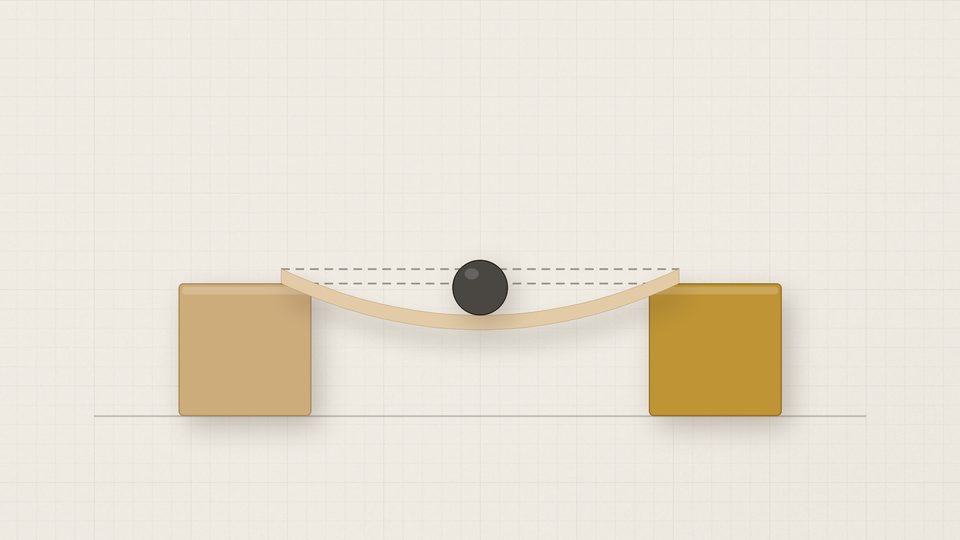
The founder has no answer. Nothing in the model could have produced one, because a model of outcomes takes the idea's structure as given. It computes what follows from the assumptions. It cannot ask whether the world is ready.
What the arithmetic cannot see
Our own report puts it plainly on its last page: a simulation is a calculator. It computes the consequences of the assumptions it was given and does not check whether they are true. Four questions sit outside any such calculation, and each of them can sink a plan whose numbers look fine.
1. Why now?
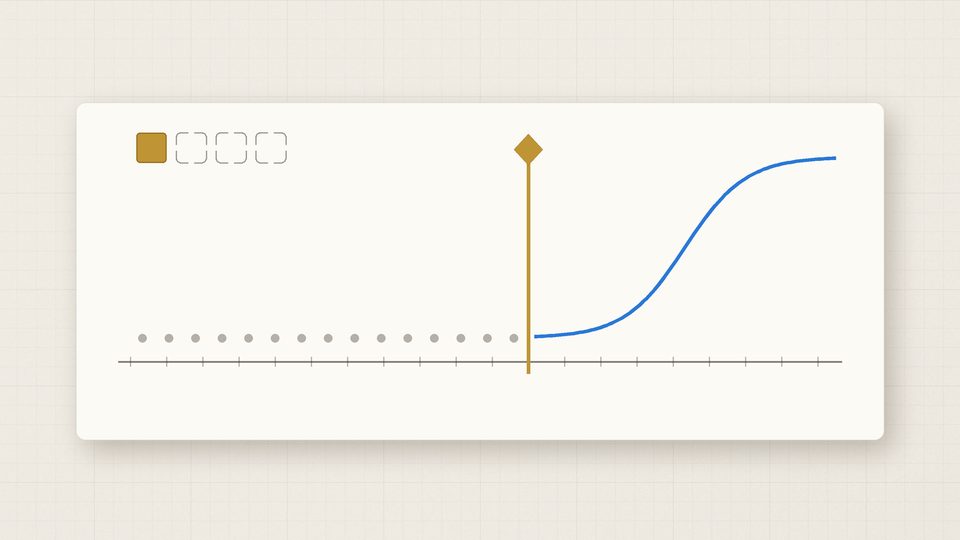
Name the specific change that made this possible recently: a cost that fell, a regulation that changed, a habit that shifted, a new capability. Then date it. "Growing digitisation" is not an answer; it is the absence of one dressed up as an answer.
If you cannot name and date a change, there is an uncomfortable but useful reading: the idea has been possible for some time, and the market has not taken it up. That silence is evidence. It may have a good explanation, but it has to be explained, not dismissed.
2. What compounds?
Which advantage grows over time if the business works? Common candidates are scale economics, network effects, switching costs, brand, a process others cannot easily copy, a scarce resource, or counter-positioning: a model an established player cannot copy without hurting its own business. If the honest answer is "nothing", expect competitors to arrive once you prove there is demand, and expect margins to be squeezed toward zero.
3. What is melting?
Which parts of your offering are turning from bespoke into commodity, and how fast? If the thing you sell will be cheap or free in two years, that is a timing problem, not a strategy problem, and the difference matters for what you build first.
4. Is the shape asymmetric?
Is the downside bounded and the upside open? An idea that can lose only a known, limited amount but could pay off far more than expected can be worth acting on even when the odds look poor. A bet with a large downside needs far better odds. Ask how much you can lose, and whether the good outcomes are capped.
The lockers again
Back to the made-up lockers. Working through the four questions changes the conversation. Why now: the founder cannot date a change, so the silence becomes the first thing to investigate, perhaps by asking building managers whether they have been offered this before and why they said no. What compounds: perhaps contracts with building managers, if they are exclusive. What is melting: little, since lockers are hardware. The shape: the downside per building is bounded by the installation cost. None of this was in the model, and all of it changes what to test first.
How Startup Intelligence asks these questions
Every Startup Intelligence run includes a structural reading built around exactly these four questions. The engine asks for it separately from the simulation and tells the model to judge the structure on its own terms, without regard to whether the numbers clear your bar, so that it is free to disagree with them.
Two rules keep it honest. If no enabling change can be dated, the reading has to say plainly that the idea has been available for some time and that the market's non-adoption is itself evidence; the prompt names "the timing is favourable" as the kind of answer that will be rejected, and if the model's text leaves the plain sentence out, the engine adds it. And if nothing compounds, the margin is modelled as decaying toward zero rather than holding, and the summary has to say so. The run page shows "No enabling change could be dated" when that is the case.
When the structural reading and the simulation point different ways, the report does not average them. The page "What this comes to" leads with a callout that the two readings disagree and that this is the finding, and neither is overruled.
The limits of this reading
The structural reading is the AI model's judgement on what you wrote. The engine has no search tool during a run, and the run page marks each of the four answers as having no source. Treat its answers as questions to check with real people and real documents, not as conclusions about your market.
Takeaway
Before trusting a model that clears your bar, answer the four questions it cannot: why now, what compounds, what is melting, and whether the downside is bounded. If you cannot date the change that makes your idea possible now, find out why the market has stayed silent. To see how this fits into a run, read what happens during a run, and to find the assumptions behind your answers, read assumptions that look safe and are not. For the whole process, start with how to test a startup idea before you build it; the how it works page shows all nine stages.
Reports support planning. They are not investment advice and not a guarantee of results.
Key takeaways
- A model that clears your bar still has not explained why nobody has done this before.
- Answer four questions the numbers cannot: why now, what compounds, what is melting, and is the downside bounded.
- When the structure and the numbers disagree, read both; the disagreement is the finding.
Questions
What does 'why now' mean for a startup?
It asks which specific, recent change made the idea possible or newly attractive: a cost that fell, a rule that changed, a habit that shifted or a capability that appeared. A good answer names the change and dates it.
What if I cannot name a recent change?
Then the honest reading is that the idea has been possible for some time and the market has not adopted it. That silence is evidence to explain, not something to wave away.
Startup Intelligence: what it does